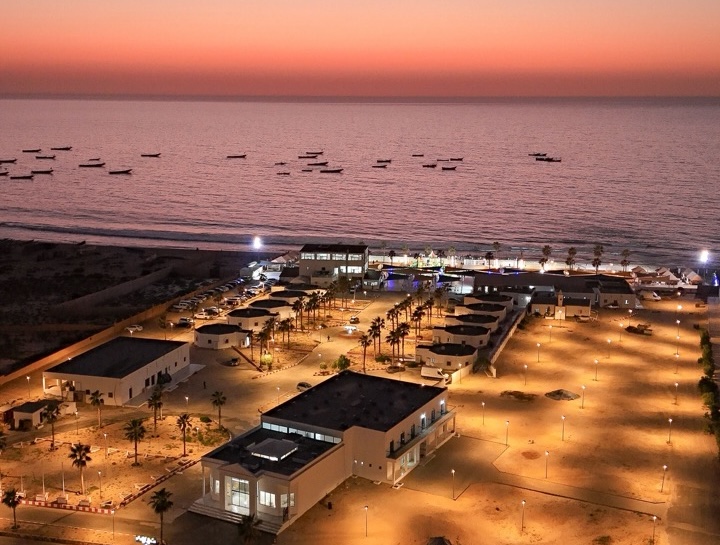
Mauritania is increasingly attracting the attention of international investors. Strategically positioned at the crossroads of North Africa, West Africa and the Atlantic Ocean, endowed with significant natural resources and supported by several major development projects, the country offers opportunities across sectors including mining, energy, infrastructure, fisheries, agriculture and business services.
For international companies, however, Mauritania remains a market that requires a tailored approach. Understanding the economic environment, identifying the right stakeholders and having reliable local support can significantly facilitate market entry and business development.
Here are some of the key factors businesses should consider before investing or expanding into Mauritania in 2026.
An economy in transformation
After recording real GDP growth of 6.3% in 2024, Mauritania’s economy grew by 4.0% in 2025, according to the International Monetary Fund (IMF). The slowdown was partly attributable to a contraction in the extractive sector and slower growth in non-extractive activities.
For 2026, the IMF projects growth of approximately 4.8%, supported in particular by an expected recovery in extractive activities. The IMF also notes that liquefied natural gas (LNG) exports have started contributing to the country’s external accounts.
Source: International Monetary Fund, Islamic Republic of Mauritania – ECF/EFF and RSF Review, June 2026.
Why consider Mauritania?
Mauritania first benefits from a distinctive geographical position.
With its Atlantic coastline and borders with Senegal, Mali, Algeria and Western Sahara, the country provides a connection point between West Africa, North Africa and international maritime trade routes.
The Mauritanian Investment Promotion Agency (APIM) notably highlights the country’s connections with African, European and American trade corridors.
The economy also benefits from substantial natural resources, including iron ore, gold, copper, fisheries resources and natural gas, as well as considerable solar and wind energy potential.
Source: Mauritanian Investment Promotion Agency (APIM), Why Mauritania? – Overview, accessed August 2026.
Mining : a historic pillar of the economy
Mining remains one of the principal drivers of Mauritania’s economy.
According to APIM, the sector accounts for approximately 19.4% of GDP and more than USD 3 billion in exports. Mauritania has significant resources including iron ore, gold, copper, gypsum, phosphates and uranium.
More than 900 mineral occurrences have been identified, primarily in the Tiris Zemmour and Inchiri regions.
Business opportunities extend well beyond the extraction of natural resources. They also cover the broader mining value chain, including:
- Industrial equipment
- Maintenance services
- Spare parts
- Engineering
- Transport and logistics
- Industrial safety
- Environmental solutions
- Mining technologies
- Technical training
For international industrial companies and equipment manufacturers, becoming a supplier or partner to mining operators can provide an attractive route into the Mauritanian market.
Source: APIM, Investment Opportunities – Mining, accessed August 2026.
Natural gas: a new economic dimension
The development of offshore natural gas represents one of Mauritania’s most significant economic transformations in recent years.
The Greater Tortue Ahmeyim (GTA) project, located offshore along the maritime border between Mauritania and Senegal, marks the country’s entry into a new phase of gas industry development.
According to the IMF’s 2026 data, the start of LNG exports is now contributing to developments in Mauritania’s external accounts.
Beyond gas production itself, the development of this industry can generate demand across a broad range of activities:
- Engineering
- Industrial maintenance
- Marine services
- Logistics
- Technical equipment
- Safety and security
- Transportation
- Professional training
- Business services
APIM also identifies opportunities in exploration and production, storage and transportation infrastructure, energy logistics and electricity generation.
Sources: IMF, Mauritania report, June 2026; APIM, Investment Opportunities – Energy.
Renewable energy and green hydrogen
Mauritania’s energy potential extends far beyond hydrocarbons.
According to APIM, certain areas of the country have solar potential reaching approximately 2,300 kWh/m², while wind speeds can reach approximately 9 m/s in favourable locations.
These characteristics have helped position Mauritania among the countries being considered for the development of large-scale green hydrogen projects.
Potential business opportunities include:
- Solar power generation
- Wind energy
- Energy storage
- Electrical infrastructure
- Water desalination
- Engineering
- Equipment supply
- Maintenance
- Environmental services
- Technical training
Mauritania has also developed a specific regulatory framework for green hydrogen.
However, investors should distinguish carefully between projects that have secured financing and moved toward implementation and those that remain at the announcement or feasibility-study stage.
Source: APIM, Investment Opportunities – Energy, accessed August 2026.
Construction and infrastructure
Economic growth and the development of extractive industries require adequate infrastructure.
Roads, ports, electricity networks, water infrastructure, housing, industrial buildings and public facilities all represent areas capable of generating opportunities for both local and international businesses.
Demand may include:
- Construction companies
- Engineering firms
- Technical consultancies
- Building material suppliers
- Industrial equipment
- Water treatment and distribution
- Electrical installations
- Maintenance services
The IMF notes that public infrastructure investment and private investment are expected to continue supporting Mauritania’s medium-term economic outlook.
Fisheries and seafood processing
Fisheries represent another strategic sector of the Mauritanian economy.
Mauritania has approximately 750 kilometres of Atlantic coastline and an exclusive economic zone of around 234,000 km².
According to APIM, fisheries contribute approximately 10% of the economy and generate around 370,000 direct and indirect jobs. The agency also reports exports of approximately USD 1.1 billion.
Opportunities extend beyond fishing itself. A significant part of the sector’s potential lies in creating more value locally through:
- Seafood processing
- Canning
- Cold-storage facilities
- Ice production
- Packaging
- Cold-chain logistics
- Port infrastructure
- Aquaculture
- Quality control
- Traceability solutions
Companies offering technologies that improve seafood processing, preservation and traceability may therefore find attractive opportunities.
Source: APIM, Investment Opportunities – Fisheries, accessed August 2026.
Agriculture, livestock and agribusiness
Agriculture and agribusiness also represent significant opportunities for economic diversification.
According to APIM, Mauritania has approximately 513,000 hectares of arable land across several agro-ecological zones.
At the same time, more than 70% of the country’s food requirements are currently met through imports, according to the agency, highlighting the potential for greater domestic production and processing.
Mauritania also has a livestock population exceeding 30 million head, making livestock an important economic sector.
Potential opportunities include:
- Irrigation
- Agricultural equipment
- Crop production
- Food processing
- Dairy production and processing
- Animal feed
- Storage
- Cold-chain infrastructure
- Packaging
- Logistics
Developing domestic agribusiness capacity could both serve the local market and create additional export opportunities.
Source: APIM, Investment Opportunities – Agriculture and Livestock, accessed August 2026.
Digital economy and business services
Mauritania’s economic diversification also depends on modernisation and digitalisation.
Banks, government institutions, industrial companies, telecommunications operators and SMEs increasingly require solutions that can improve productivity, management and customer interactions.
Potential opportunities include:
- Business software
- ERP and CRM systems
- Cybersecurity
- Cloud services
- Fintech
- Digital payments
- Telecommunications
- Process digitalisation
- Digital skills and training
The IMF identifies reforms in the financial sector, governance, vocational training and investment as important components of efforts to diversify the economy beyond extractive industries.
Source: IMF, Mauritania – Fifth Reviews of ECF/EFF and RSF Arrangements, January 2026.
An evolving business environment
Mauritania adopted a new Investment Code – Law No. 2025-006 in 2025.
According to APIM, the framework aims to strengthen legal stability and predictability for investors while providing investment incentives and guarantees.
The principles highlighted include:
- Equal treatment of domestic and foreign investors
- Protection against expropriation under the conditions provided by law
- The ability to transfer capital, profits and dividends
- Access to foreign currency in accordance with applicable regulations
- Access to land for investment projects, subject to applicable rules
Mauritania also has specific regulatory frameworks covering areas including public-private partnerships, mining, hydrocarbons and green hydrogen.
Sources: APIM, Business Climate; APIM, Incentives and Guarantees; Law No. 2025-006 establishing the Investment Code.
How can a foreign company enter the Mauritanian market?
Identifying an opportunity is only the beginning. Success depends significantly on the chosen market-entry strategy.
Understand the market
Before establishing a presence, businesses should assess:
- The actual size of the addressable market
- Key potential customers
- Competitors
- Pricing
- Regulatory requirements
- Decision-making processes
- Sector-specific requirements
A focused market assessment can help determine whether the commercial opportunity justifies a larger investment.
Identify the right partners
In many industries, working with a local partner, distributor or representative can accelerate market access.
However, selecting a partner should involve appropriate due diligence covering reputation, references, commercial network, legal status, industry experience and operational capabilities.
Build local relationships
Local knowledge and professional relationships play an important role in business development.
Face-to-face meetings, regular presence in Mauritania and the gradual development of a professional network can provide a better understanding of decision-making processes and help identify opportunities that may not always be visible from abroad.
Enter the market gradually
A foreign company does not necessarily need to establish a fully staffed subsidiary immediately.
Depending on its sector and objectives, it can begin through:
- Market research
- Business development missions
- Distributor identification
- A local partnership
- Commercial representation
This approach allows companies to test the market before committing more significant resources.
Why consider local representation in Mauritania?
For companies based in Europe, Africa, the Middle East or elsewhere, developing a new market entirely from abroad can quickly become challenging.
A local representative can help to:
- Identify new business opportunities
- Meet prospective customers
- Identify potential partners
- Monitor tenders
- Represent the company at meetings
- Follow up on commercial opportunities
- Provide insights into market developments
The objective is not necessarily to replace a future subsidiary, but rather to allow a company to build its business gradually before assuming the costs of a permanent local structure.
What are the main risks?
Like any emerging market, Mauritania also presents challenges that investors should incorporate into their analysis.
These may include:
- Administrative procedures
- Logistics constraints
- Availability of certain specialised skills
- Access to financing
- Regulatory changes
- Exposure to certain regional risks
- Selection of reliable commercial partners
The IMF also highlights several external risks to the economic outlook, including geopolitical tensions, international energy prices and potential disruption to regional trade corridors.
Thorough preparation, appropriate due diligence and strong local market knowledge therefore remain essential.
Source: International Monetary Fund, Mauritania report, June 2026.
Mauritania: is 2026 the right time to enter the market?
Mauritania will not necessarily be the right market for every company.
However, for businesses operating in mining, energy, infrastructure, fisheries, agriculture, agribusiness, technology and B2B services, the transformations currently underway deserve serious attention.
Developments in the energy sector, infrastructure investment, efforts to diversify the economy and reforms to the investment framework could progressively create new opportunities for international companies.
The most appropriate strategy does not necessarily involve making a major investment from day one.
A more pragmatic approach is often to:
Understand the market → identify the right partners → build your network → test commercial opportunities → invest progressively.
Are you considering expanding your business into Mauritania?
Talents Conseil supports international companies seeking to explore, enter and grow in the Mauritanian market.
Our services include:
- Market research and analysis
- Mauritania market-entry strategy
- Partner and distributor identification
- Business development and prospecting
- Local representation
- Commercial development support
Our approach enables international businesses to benefit from local market support, assess the real potential of opportunities and develop their first commercial relationships before establishing a permanent local structure.
Considering doing business in Mauritania? Let’s talk.
Sources and references
- International Monetary Fund (IMF) – Islamic Republic of Mauritania: Requests for an Extended Arrangement under the EFF and ECF and Fifth Review under the Resilience and Sustainability Facility Arrangement, June 2026.
- International Monetary Fund (IMF) – Mauritania: Fifth Reviews of the Extended Credit Facility, Extended Fund Facility and Resilience and Sustainability Facility Arrangements, January 2026.
- Mauritanian Investment Promotion Agency (APIM) – Why Mauritania? Overview, accessed August 2026.
- APIM – Investment Opportunities, Mining, accessed August 2026.
- APIM – Investment Opportunities, Energy, accessed August 2026.
- APIM – Investment Opportunities, Fisheries, accessed August 2026.
- APIM – Investment Opportunities, Agriculture and Livestock, accessed August 2026.
- APIM – Business Climate, accessed August 2026.
- Islamic Republic of Mauritania – Law No. 2025-006 establishing the Investment Code.
Disclaimer
The information contained in this article is provided for general informational purposes only and does not constitute legal, tax, financial or investment advice. Statistics, regulations and investment projects may change over time. Companies and investors should verify relevant information with the competent authorities and obtain appropriate professional advice before making investment decisions.
Talents Conseil – Your trusted local partner for doing business in Mauritania.